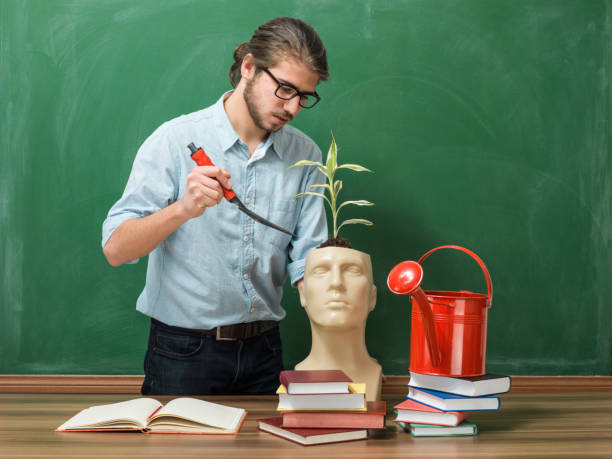
Education, as we’ve known it, is kind of going through a weird phase. Remember when school meant sitting in a classroom, copying notes from the board, and praying you’d survive exams? Well, those days aren’t completely gone, but things are definitely changing in ways that feel both exciting and a little bizarre. From virtual classrooms to AI tutors, the way we learn is getting a makeover—and honestly, some of it feels straight out of a sci-fi movie.
Learning Without a Desk
One of the strangest shifts is how the traditional classroom is losing its monopoly. Thanks to technology, you can now learn almost anything from anywhere. Virtual reality (VR) classrooms let students “walk” through ancient Rome or dive into the ocean without leaving home. It’s wild. I mean, I once tried a VR history lesson where I got chased by a Roman centurion. Totally not in the curriculum, but hey, it made the lesson unforgettable.
Even schools themselves are experimenting with learning spaces that don’t look like classrooms at all. Some have converted hallways, cafeterias, and even outdoor gardens into study zones. The idea is simple: kids focus better when learning feels less like punishment and more like exploration. I’m not sure if this works for everyone, but seeing kids happily spread out with laptops and sketchpads instead of being crammed into rows is a refreshing change.
AI: The New Study Buddy
Artificial intelligence is stepping in like a very helpful, very patient study buddy. Imagine a tutor who never gets annoyed if you ask the same question twenty times or explains things in a thousand different ways until it clicks. That’s AI in education today. Tools like adaptive learning platforms track how you study, what mistakes you make, and then adjust the lessons accordingly.
But here’s the weird part: some AI systems are starting to suggest what you should learn next based on your personality and interests, not just your grades. It’s like having a personal coach who somehow knows you better than you know yourself. Creepy? Maybe. Helpful? Absolutely. I once used an AI platform that suggested I try coding after I showed an interest in music composition. I had no idea those could connect, but suddenly I’m experimenting with algorithmic music. Weird, right?
Gamification Everywhere
Turns out, learning can be fun—if it’s disguised as a game. Schools and online platforms are increasingly gamifying lessons. Students earn points, badges, and even virtual currencies for completing assignments or hitting learning milestones. Some classrooms have leaderboards (yes, like video games) and collaborative challenges that make you actually want to participate.
It sounds silly, but it works. Motivation in traditional education can be…let’s just say, “lacking.” But when kids are competing to save a virtual planet by solving math problems, they suddenly care a lot more. The gaming approach also lets students fail safely. In a game, failing doesn’t ruin your life—it just teaches you how to try again smarter. That lesson, I think, is something schools have struggled to teach for decades.
Forget Memorization—Think Experience
Memorizing dates, formulas, and definitions is slowly losing its charm. The trend now is to focus on experience-based learning. Schools are encouraging hands-on projects, field trips, and problem-solving activities that simulate real-world challenges. For instance, instead of reading about renewable energy, students might actually build a small solar-powered vehicle.
Even group projects are evolving. In some schools, students form “startups” to tackle social issues, pitch ideas to real investors, and even launch mini-products. It’s chaotic and messy, but the kind of chaos that sparks creativity. Honestly, if I had done something like that as a kid, I probably would’ve remembered more than just random historical dates.
Learning Anytime, Anywhere
The old 8 AM to 3 PM schedule is slowly fading. Online platforms, flexible schedules, and self-paced learning mean education is no longer confined to a bell. Students can learn at 2 AM if they’re night owls, or during lunch breaks if that works better. Some schools even let students design their own curriculum, choosing subjects that align with their passions rather than a rigid syllabus.
It’s not all sunshine, of course. Some kids struggle without the structure of traditional school. But for many, the flexibility sparks a sense of ownership over learning. When you get to decide what, when, and how you learn, it stops feeling like homework and starts feeling like self-improvement.
Teachers Are Becoming Guides, Not Dictators
With all these changes, the role of teachers is transforming too. No longer are they just lecturers standing at the front of the room. Today, they act more like mentors, guides, and facilitators. Their job is to encourage curiosity, help students navigate resources, and provide feedback rather than dictate every step.
It’s a weird shift for a profession that’s been rooted in authority for centuries, but it’s also one that seems necessary. Knowledge isn’t just about memorizing facts anymore—it’s about thinking critically, experimenting, and learning from mistakes. Teachers who embrace this role often find themselves learning alongside their students. And that’s kind of beautiful when you think about it.
The Challenges and Quirks
Of course, not everything is smooth. There’s the digital divide—some students don’t have access to fancy tech or stable internet. Not every kid thrives in a flexible environment. And sometimes, the sheer amount of options can be overwhelming. Imagine having a million apps, games, and AI tutors all vying for your attention—exciting, but also exhausting.
Plus, some of these new methods are still experimental. VR lessons can make some students nauseous, gamification might turn learning into just chasing points, and self-paced courses require a lot of self-discipline. But for every quirk or hiccup, there’s a chance for innovation that might make education more engaging, equitable, and effective than ever.
The Takeaway
The weird makeover of education is proof that learning doesn’t have to be boring, rigid, or one-size-fits-all. Classrooms are expanding beyond walls, teachers are becoming guides, and students are exploring knowledge in ways that were unthinkable a decade ago. Some methods might feel strange, even uncomfortable at first, but they open doors to creativity, curiosity, and lifelong learning.
In the end, education is catching up to life itself: unpredictable, messy, and full of surprises. And honestly, I think that’s exactly what we needed.